
Reaktionsmasse aus 1-Heptyl-4- ethyl-2,6,7-trioxabicyclo[2.2.2]-octan und 1-Nonyl-4-ethyl-2,6,7-trioxabicyclo[2.2.2]-octan
- CAS-Nr.
- 196965-91-0
- EG-Nr.
- 426-510-7
- Index-Nr.
- 601-077-00-9
Reaktionsmasse aus 1-Heptyl-4- ethyl-2,6,7-trioxabicyclo[2.2.2]-octan und 1-Nonyl-4-ethyl-2,6,7-trioxabicyclo[2.2.2]-octan (CAS 196965-91-0) ist nach CLP als Aquatic Acute 1, Aquatic Chronic 1 eingestuft: H400, H410, Piktogramm GHS09, Signalwort Achtung. Quelle: Verordnung (EG) Nr. 1272/2008, Anhang VI, Stand 1. Juli 2026.
Welche Piktogramme und welches Signalwort gelten?
Achtung
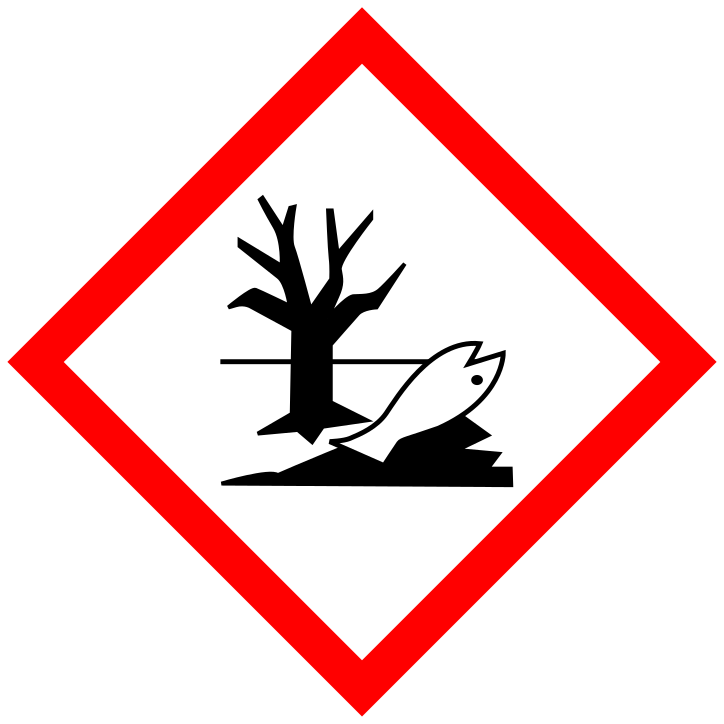
Wie ist Reaktionsmasse aus 1-Heptyl-4- ethyl-2,6,7-trioxabicyclo[2.2.2]-octan und 1-Nonyl-4-ethyl-2,6,7-trioxabicyclo[2.2.2]-octan nach CLP eingestuft?
| Gefahrenklasse und -kategorie | Gefahrenklasse |
|---|---|
| Aquatic Acute 1 | Gewässergefährdend |
| Aquatic Chronic 1 | Gewässergefährdend |
Welche H-Sätze hat Reaktionsmasse aus 1-Heptyl-4- ethyl-2,6,7-trioxabicyclo[2.2.2]-octan und 1-Nonyl-4-ethyl-2,6,7-trioxabicyclo[2.2.2]-octan?
Welche P-Sätze werden empfohlen?
Anhang VI legt keine P-Sätze fest. Diese Auswahl stammt aus PubChem und ist eine Empfehlung. Welche P-Sätze auf das Etikett kommen, wählt der Lieferant.
Welche Nummern hat Reaktionsmasse aus 1-Heptyl-4- ethyl-2,6,7-trioxabicyclo[2.2.2]-octan und 1-Nonyl-4-ethyl-2,6,7-trioxabicyclo[2.2.2]-octan?
- CAS-Nr.
- 196965-91-0
- EG-Nr.
- 426-510-7
- Index-Nr.
- 601-077-00-9
- Bezeichnung in Anhang VI
- Reaktionsmasse aus 1-Heptyl-4- ethyl-2,6,7-trioxabicyclo[2.2.2]-octan und 1-Nonyl-4-ethyl-2,6,7-trioxabicyclo[2.2.2]-octan
Wo finde ich mehr über Reaktionsmasse aus 1-Heptyl-4- ethyl-2,6,7-trioxabicyclo[2.2.2]-octan und 1-Nonyl-4-ethyl-2,6,7-trioxabicyclo[2.2.2]-octan?
Häufige Fragen
Wie ist Reaktionsmasse aus 1-Heptyl-4- ethyl-2,6,7-trioxabicyclo[2.2.2]-octan und 1-Nonyl-4-ethyl-2,6,7-trioxabicyclo[2.2.2]-octan eingestuft?
Nach Anhang VI der CLP-Verordnung als Aquatic Acute 1 und Aquatic Chronic 1. Gefahrenhinweise: H400 und H410.
Was bedeuten die H-Sätze von Reaktionsmasse aus 1-Heptyl-4- ethyl-2,6,7-trioxabicyclo[2.2.2]-octan und 1-Nonyl-4-ethyl-2,6,7-trioxabicyclo[2.2.2]-octan?
H400: Sehr giftig für Wasserorganismen. H410: Sehr giftig für Wasserorganismen mit langfristiger Wirkung.
Welche Piktogramme braucht Reaktionsmasse aus 1-Heptyl-4- ethyl-2,6,7-trioxabicyclo[2.2.2]-octan und 1-Nonyl-4-ethyl-2,6,7-trioxabicyclo[2.2.2]-octan?
Anhang VI nennt GHS09 (Umwelt).
Welches Signalwort hat Reaktionsmasse aus 1-Heptyl-4- ethyl-2,6,7-trioxabicyclo[2.2.2]-octan und 1-Nonyl-4-ethyl-2,6,7-trioxabicyclo[2.2.2]-octan?
Das Signalwort ist „Achtung“.
Welche P-Sätze gelten für Reaktionsmasse aus 1-Heptyl-4- ethyl-2,6,7-trioxabicyclo[2.2.2]-octan und 1-Nonyl-4-ethyl-2,6,7-trioxabicyclo[2.2.2]-octan?
Anhang VI legt keine P-Sätze fest. PubChem empfiehlt P273, P391 und P501. Welche auf das Etikett kommen, wählt der Lieferant.
Welche CAS-Nummer und EG-Nummer hat Reaktionsmasse aus 1-Heptyl-4- ethyl-2,6,7-trioxabicyclo[2.2.2]-octan und 1-Nonyl-4-ethyl-2,6,7-trioxabicyclo[2.2.2]-octan?
CAS-Nr. 196965-91-0, EG-Nr. 426-510-7, Index-Nr. 601-077-00-9.