
Ammoniumbis(1-(3,5-dinitro-2-oxidophenylazo)-3-(N-phenylcarbamoyl)-2-naphtholato)chromat(1-)
- CAS-Nr.
- 109125-51-1
- EG-Nr.
- 400-110-2
- Index-Nr.
- 024-011-00-5
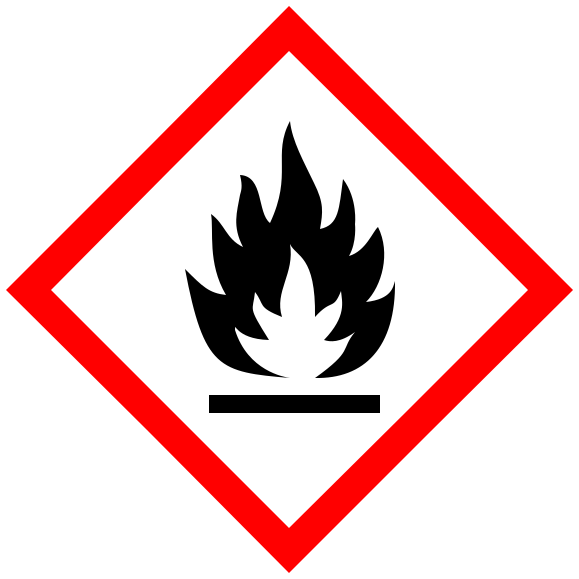
Ammoniumbis(1-(3,5-dinitro-2-oxidophenylazo)-3-(N-phenylcarbamoyl)-2-naphtholato)chromat(1-) (CAS 109125-51-1) ist nach CLP als Self-react. C, Aquatic Acute 1, Aquatic Chronic 1 eingestuft: H242, H400, H410, Piktogramme GHS02, GHS09, Signalwort Gefahr. Quelle: Verordnung (EG) Nr. 1272/2008, Anhang VI, Stand 1. Juli 2026.
Welche Piktogramme und welches Signalwort gelten?
Gefahr

Wie ist Ammoniumbis(1-(3,5-dinitro-2-oxidophenylazo)-3-(N-phenylcarbamoyl)-2-naphtholato)chromat(1-) nach CLP eingestuft?
| Gefahrenklasse und -kategorie | Gefahrenklasse |
|---|---|
| Self-react. C | Selbstzersetzliche Stoffe oder Gemische |
| Aquatic Acute 1 | Gewässergefährdend |
| Aquatic Chronic 1 | Gewässergefährdend |
Welche H-Sätze hat Ammoniumbis(1-(3,5-dinitro-2-oxidophenylazo)-3-(N-phenylcarbamoyl)-2-naphtholato)chromat(1-)?
Welche P-Sätze werden empfohlen?
Anhang VI legt keine P-Sätze fest. Diese Auswahl stammt aus PubChem und ist eine Empfehlung. Welche P-Sätze auf das Etikett kommen, wählt der Lieferant.
- P210
- Von Hitze, heißen Oberflächen, Funken, offenen Flammen sowie anderen Zündquellenarten fernhalten. Nicht rauchen.
- P234
- Nur in Originalverpackung aufbewahren.
- P235
- Kühl halten.
- P240
- Behälter und zu befüllende Anlage erden.
- P273
- Freisetzung in die Umwelt vermeiden.
- P280
- Schutzhandschuhe/Schutzkleidung/Augenschutz/Gesichtsschutz tragen.
- P370+P378
- Bei Brand: … zum Löschen verwenden.
- P391
- Verschüttete Mengen aufnehmen.
- P403
- An einem gut belüfteten Ort aufbewahren.
- P410
- Vor Sonnenbestrahlung schützen.
- P411
- Bei Temperaturen nicht über …°C/…°F aufbewahren.
- P420
- Getrennt aufbewahren.
- P501
- Inhalt/Behälter … zuführen.
Welche Nummern hat Ammoniumbis(1-(3,5-dinitro-2-oxidophenylazo)-3-(N-phenylcarbamoyl)-2-naphtholato)chromat(1-)?
- CAS-Nr.
- 109125-51-1
- EG-Nr.
- 400-110-2
- Index-Nr.
- 024-011-00-5
- Summenformel
- C46H30CrN11O14
- Molare Masse
- 1.012,8 g/mol
- IUPAC-Name
- azanium;chromium(3+);bis(1-[(3,5-dinitro-2-oxidophenyl)diazenyl]-3-(phenylcarbamoyl)naphthalen-2-olate)
- InChIKey
- RDDMCPMQDAUNRT-UHFFFAOYSA-K
- PubChem-CID
- 156025076
- Bezeichnung in Anhang VI
- Ammoniumbis(1-(3,5-dinitro-2-oxidophenylazo)-3-(N-phenylcarbamoyl)-2-naphtholato)chromat(1-)
Wo finde ich mehr über Ammoniumbis(1-(3,5-dinitro-2-oxidophenylazo)-3-(N-phenylcarbamoyl)-2-naphtholato)chromat(1-)?
Häufige Fragen
Wie ist Ammoniumbis(1-(3,5-dinitro-2-oxidophenylazo)-3-(N-phenylcarbamoyl)-2-naphtholato)chromat(1-) eingestuft?
Nach Anhang VI der CLP-Verordnung als Self-react. C, Aquatic Acute 1 und Aquatic Chronic 1. Gefahrenhinweise: H242, H400 und H410.
Was bedeuten die H-Sätze von Ammoniumbis(1-(3,5-dinitro-2-oxidophenylazo)-3-(N-phenylcarbamoyl)-2-naphtholato)chromat(1-)?
H242: Erwärmung kann Brand verursachen. H400: Sehr giftig für Wasserorganismen. H410: Sehr giftig für Wasserorganismen mit langfristiger Wirkung.
Welche Piktogramme braucht Ammoniumbis(1-(3,5-dinitro-2-oxidophenylazo)-3-(N-phenylcarbamoyl)-2-naphtholato)chromat(1-)?
Anhang VI nennt GHS02 (Flamme) und GHS09 (Umwelt).
Welches Signalwort hat Ammoniumbis(1-(3,5-dinitro-2-oxidophenylazo)-3-(N-phenylcarbamoyl)-2-naphtholato)chromat(1-)?
Das Signalwort ist „Gefahr“.
Welche P-Sätze gelten für Ammoniumbis(1-(3,5-dinitro-2-oxidophenylazo)-3-(N-phenylcarbamoyl)-2-naphtholato)chromat(1-)?
Anhang VI legt keine P-Sätze fest. PubChem empfiehlt P210, P234, P235, P240, P273, P280, P370+P378, P391, P403, P410, P411, P420 und P501. Welche auf das Etikett kommen, wählt der Lieferant.
Welche CAS-Nummer und EG-Nummer hat Ammoniumbis(1-(3,5-dinitro-2-oxidophenylazo)-3-(N-phenylcarbamoyl)-2-naphtholato)chromat(1-)?
CAS-Nr. 109125-51-1, EG-Nr. 400-110-2, Index-Nr. 024-011-00-5.