
4-[4-Amino-5-hydroxy-3-(4-(2-sulfoxyethylsulfonyl)phenylazo)-2,7-disulfonapht-6-ylazo]-6-[3-(4-amino-5-hydroxy-3-(4-(2-sulfoxyethylsulfonyl)phenylazo)-2,7-disulfonapht-6-ylazo]phenylcarbonylamino]benolsulfonsäure, Natriumsalz
- CAS-Nr.
- 161935-19-9
- EG-Nr.
- 417-640-5
- Index-Nr.
- 607-451-00-8
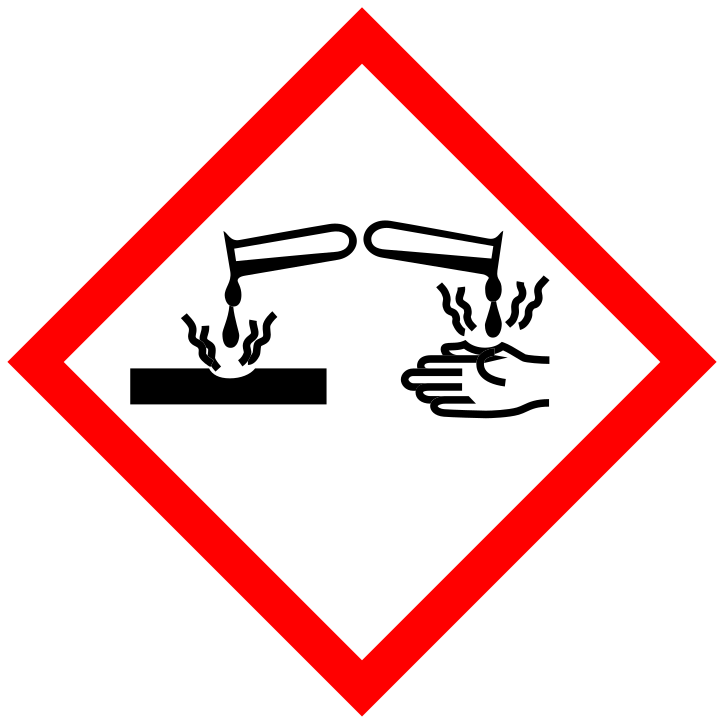
4-[4-Amino-5-hydroxy-3-(4-(2-sulfoxyethylsulfonyl)phenylazo)-2,7-disulfonapht-6-ylazo]-6-[3-(4-amino-5-hydroxy-3-(4-(2-sulfoxyethylsulfonyl)phenylazo)-2,7-disulfonapht-6-ylazo]phenylcarbonylamino]benolsulfonsäure, Natriumsalz (CAS 161935-19-9) ist nach CLP als Eye Dam. 1, Skin Sens. 1 eingestuft: H318, H317, Piktogramme GHS05, GHS07, Signalwort Gefahr. Quelle: Verordnung (EG) Nr. 1272/2008, Anhang VI, Stand 1. Juli 2026.
Welche Piktogramme und welches Signalwort gelten?
Gefahr

Wie ist 4-[4-Amino-5-hydroxy-3-(4-(2-sulfoxyethylsulfonyl)phenylazo)-2,7-disulfonapht-6-ylazo]-6-[3-(4-amino-5-hydroxy-3-(4-(2-sulfoxyethylsulfonyl)phenylazo)-2,7-disulfonapht-6-ylazo]phenylcarbonylamino]benolsulfonsäure, Natriumsalz nach CLP eingestuft?
| Gefahrenklasse und -kategorie | Gefahrenklasse |
|---|---|
| Eye Dam. 1 | Schwere Augenschädigung/Augenreizung |
| Skin Sens. 1 | Sensibilisierung der Atemwege/Haut |
Welche H-Sätze hat 4-[4-Amino-5-hydroxy-3-(4-(2-sulfoxyethylsulfonyl)phenylazo)-2,7-disulfonapht-6-ylazo]-6-[3-(4-amino-5-hydroxy-3-(4-(2-sulfoxyethylsulfonyl)phenylazo)-2,7-disulfonapht-6-ylazo]phenylcarbonylamino]benolsulfonsäure, Natriumsalz?
Welche P-Sätze werden empfohlen?
Anhang VI legt keine P-Sätze fest. Diese Auswahl stammt aus PubChem und ist eine Empfehlung. Welche P-Sätze auf das Etikett kommen, wählt der Lieferant.
- P261
- Einatmen von Staub/Rauch/Gas/Nebel/Dampf/Aerosol vermeiden.
- P272
- Kontaminierte Arbeitskleidung nicht außerhalb des Arbeitsplatzes tragen.
- P280
- Schutzhandschuhe/Schutzkleidung/Augenschutz/Gesichtsschutz tragen.
- P302+P352
- BEI BERÜHRUNG MIT DER HAUT: Mit viel Wasser/… waschen.
- P321
- Besondere Behandlung (siehe … auf diesem Kennzeichnungsetikett).
- P362+P364
- Kontaminierte Kleidung ausziehen und vor erneutem Tragen waschen.
- P501
- Inhalt/Behälter … zuführen.
Welche Nummern hat 4-[4-Amino-5-hydroxy-3-(4-(2-sulfoxyethylsulfonyl)phenylazo)-2,7-disulfonapht-6-ylazo]-6-[3-(4-amino-5-hydroxy-3-(4-(2-sulfoxyethylsulfonyl)phenylazo)-2,7-disulfonapht-6-ylazo]phenylcarbonylamino]benolsulfonsäure, Natriumsalz?
- CAS-Nr.
- 161935-19-9
- EG-Nr.
- 417-640-5
- Index-Nr.
- 607-451-00-8
- Bezeichnung in Anhang VI
- 4-[4-Amino-5-hydroxy-3-(4-(2-sulfoxyethylsulfonyl)phenylazo)-2,7-disulfonapht-6-ylazo]-6-[3-(4-amino-5-hydroxy-3-(4-(2-sulfoxyethylsulfonyl)phenylazo)-2,7-disulfonapht-6-ylazo]phenylcarbonylamino]benolsulfonsäure, Natriumsalz
Wo finde ich mehr über 4-[4-Amino-5-hydroxy-3-(4-(2-sulfoxyethylsulfonyl)phenylazo)-2,7-disulfonapht-6-ylazo]-6-[3-(4-amino-5-hydroxy-3-(4-(2-sulfoxyethylsulfonyl)phenylazo)-2,7-disulfonapht-6-ylazo]phenylcarbonylamino]benolsulfonsäure, Natriumsalz?
Häufige Fragen
Wie ist 4-[4-Amino-5-hydroxy-3-(4-(2-sulfoxyethylsulfonyl)phenylazo)-2,7-disulfonapht-6-ylazo]-6-[3-(4-amino-5-hydroxy-3-(4-(2-sulfoxyethylsulfonyl)phenylazo)-2,7-disulfonapht-6-ylazo]phenylcarbonylamino]benolsulfonsäure, Natriumsalz eingestuft?
Nach Anhang VI der CLP-Verordnung als Eye Dam. 1 und Skin Sens. 1. Gefahrenhinweise: H318 und H317.
Was bedeuten die H-Sätze von 4-[4-Amino-5-hydroxy-3-(4-(2-sulfoxyethylsulfonyl)phenylazo)-2,7-disulfonapht-6-ylazo]-6-[3-(4-amino-5-hydroxy-3-(4-(2-sulfoxyethylsulfonyl)phenylazo)-2,7-disulfonapht-6-ylazo]phenylcarbonylamino]benolsulfonsäure, Natriumsalz?
H318: Verursacht schwere Augenschäden. H317: Kann allergische Hautreaktionen verursachen.
Welche Piktogramme braucht 4-[4-Amino-5-hydroxy-3-(4-(2-sulfoxyethylsulfonyl)phenylazo)-2,7-disulfonapht-6-ylazo]-6-[3-(4-amino-5-hydroxy-3-(4-(2-sulfoxyethylsulfonyl)phenylazo)-2,7-disulfonapht-6-ylazo]phenylcarbonylamino]benolsulfonsäure, Natriumsalz?
Anhang VI nennt GHS05 (Ätzwirkung) und GHS07 (Ausrufezeichen).
Welches Signalwort hat 4-[4-Amino-5-hydroxy-3-(4-(2-sulfoxyethylsulfonyl)phenylazo)-2,7-disulfonapht-6-ylazo]-6-[3-(4-amino-5-hydroxy-3-(4-(2-sulfoxyethylsulfonyl)phenylazo)-2,7-disulfonapht-6-ylazo]phenylcarbonylamino]benolsulfonsäure, Natriumsalz?
Das Signalwort ist „Gefahr“.
Welche P-Sätze gelten für 4-[4-Amino-5-hydroxy-3-(4-(2-sulfoxyethylsulfonyl)phenylazo)-2,7-disulfonapht-6-ylazo]-6-[3-(4-amino-5-hydroxy-3-(4-(2-sulfoxyethylsulfonyl)phenylazo)-2,7-disulfonapht-6-ylazo]phenylcarbonylamino]benolsulfonsäure, Natriumsalz?
Anhang VI legt keine P-Sätze fest. PubChem empfiehlt P261, P272, P280, P302+P352, P321, P362+P364 und P501. Welche auf das Etikett kommen, wählt der Lieferant.
Welche CAS-Nummer und EG-Nummer hat 4-[4-Amino-5-hydroxy-3-(4-(2-sulfoxyethylsulfonyl)phenylazo)-2,7-disulfonapht-6-ylazo]-6-[3-(4-amino-5-hydroxy-3-(4-(2-sulfoxyethylsulfonyl)phenylazo)-2,7-disulfonapht-6-ylazo]phenylcarbonylamino]benolsulfonsäure, Natriumsalz?
CAS-Nr. 161935-19-9, EG-Nr. 417-640-5, Index-Nr. 607-451-00-8.